

Description
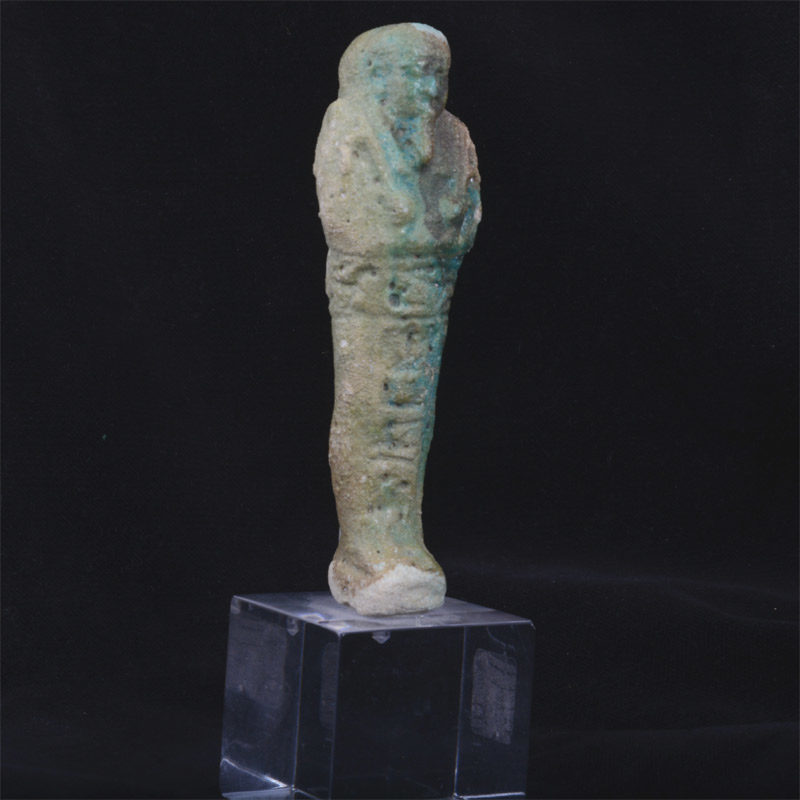
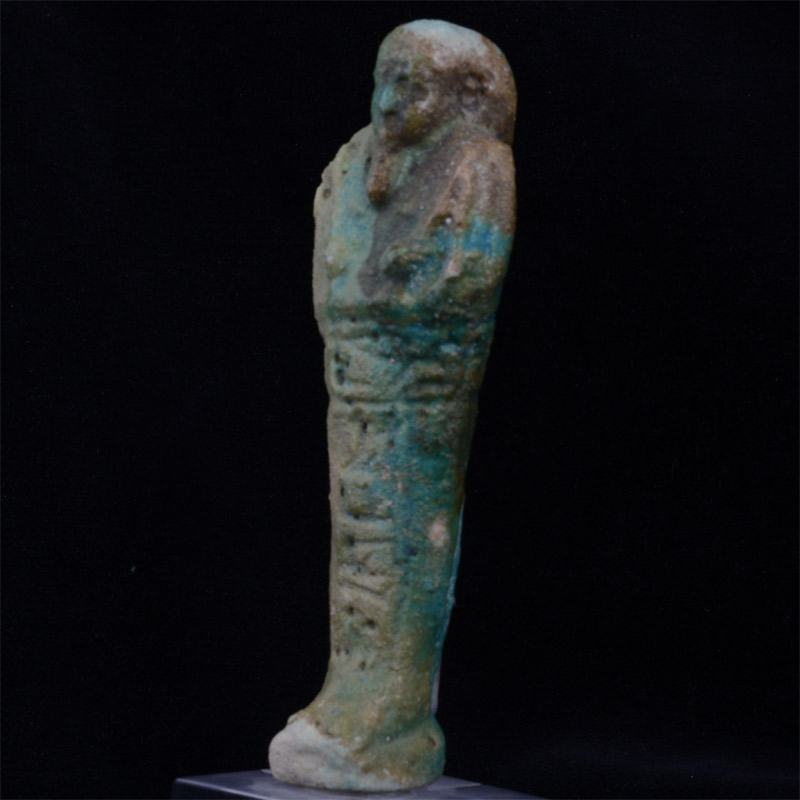
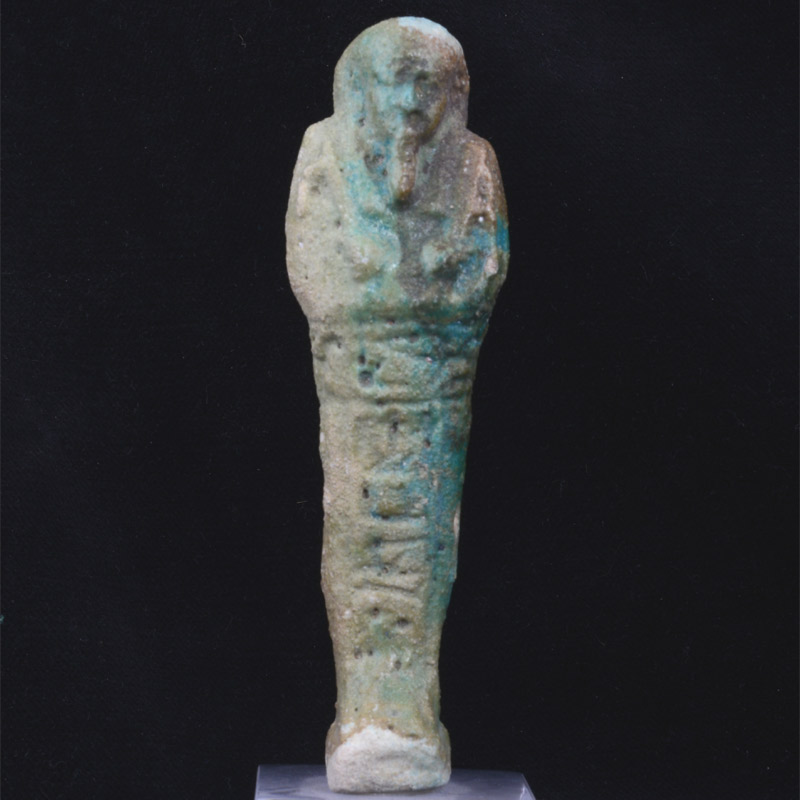
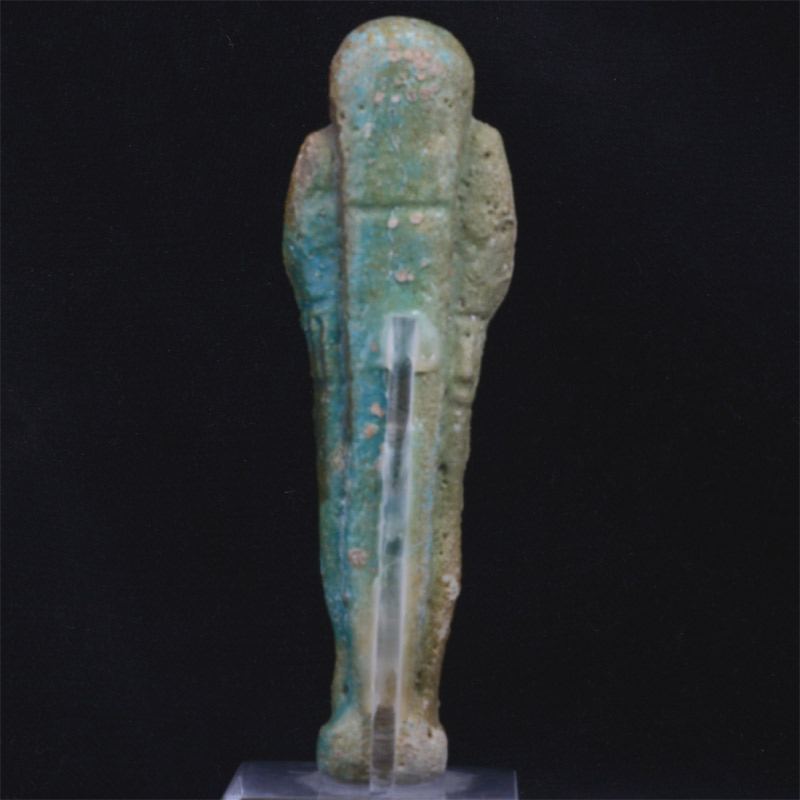
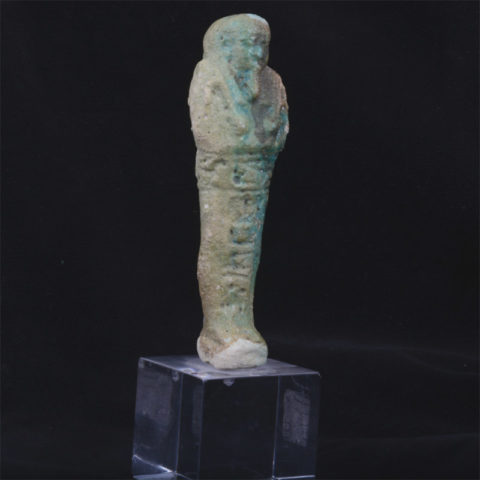
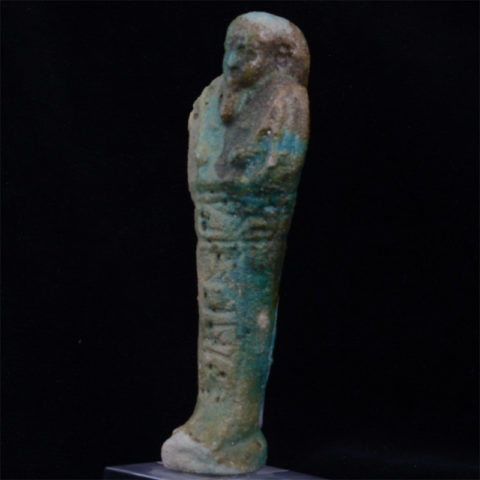
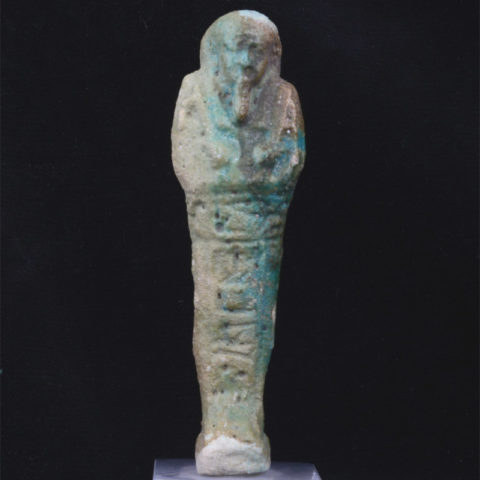
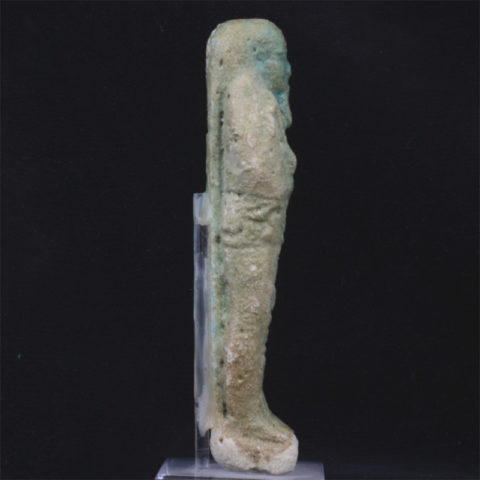
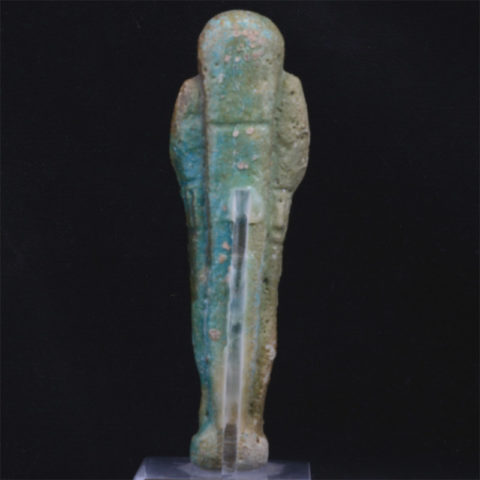
Ushabti, Faience, Late to Ptolemaic Period
The Ushabti, Faience, Late to Ptolemaic Period is a small yet powerful artifact from ancient Egypt, dating from approximately 664–30 BCE. Measuring 4¼ inches tall, this faience figurine was crafted as a funerary servant, intended to accompany the deceased into the afterlife. Its purpose was deeply rooted in Egyptian spiritual practice: to answer the call of duty when the gods summoned the departed for labor in the next world.
Symbolism and Use in Egyptian Burial Practices
Ushabtis, also known as “answerers,” were placed in tombs as part of burial rites, sometimes in sets numbering hundreds. Inscribed with hieroglyphics, these figures typically included a spell from the Book of the Dead, commanding the figure to serve the deceased when called upon. This particular Ushabti reflects the transition from the Late Period to the Ptolemaic era, a time when Greek influence began merging with traditional Egyptian practices, yet funerary customs remained largely unchanged in purpose and symbolism.
Material and Craftsmanship
This faience Ushabti is made from a non-clay ceramic glazed in a blue-green finish—believed to reflect regeneration and eternal life. The glazing remains an iconic feature of Egyptian faience, combining both spiritual significance and artistic finesse. Despite its age, the figurine retains visible hieroglyphic inscriptions, likely identifying the owner or invoking protective spells.
A Valuable Piece for Collectors and Historians
The Ushabti, Faience, Late to Ptolemaic Period is a compelling addition to any collection of ancient artifacts. It holds value not only as a piece of art but as a direct connection to the beliefs and daily rituals of ancient Egypt. Whether displayed in a private collection or studied by scholars, it stands as a tangible witness to humanity’s enduring concern with death, service, and the eternal journey.
Why Choose the Ushabti, Faience, Late to Ptolemaic Period?
-
Historical Significance: Represents funerary beliefs during the Late to Ptolemaic period of Egyptian history.
-
Spiritual Symbolism: Inscribed with hieroglyphs meant to activate afterlife service.
-
Authentic Material: Made from traditional blue-green faience, symbolic of rebirth.
-
Collectible Artifact: A rare and meaningful piece for ancient art collectors and Egyptology enthusiasts.
Bring home the Ushabti, Faience, Late to Ptolemaic Period, and own a piece of ancient tradition crafted to serve across time and eternity.